2025-05 About Palms
Some interesting facts about palms and how they are different from "real trees".
Everyone visiting Singapore botanical garden would hardly not be impressed by its palm collections. When seeing the huge divsersity of the species of the garden's collection, I found myself really no nothing about palms: What makes Palm tree a Palm? Where is their position in the evolution, i.e, how are they different from Cycad, seeds plants, conifers etc?
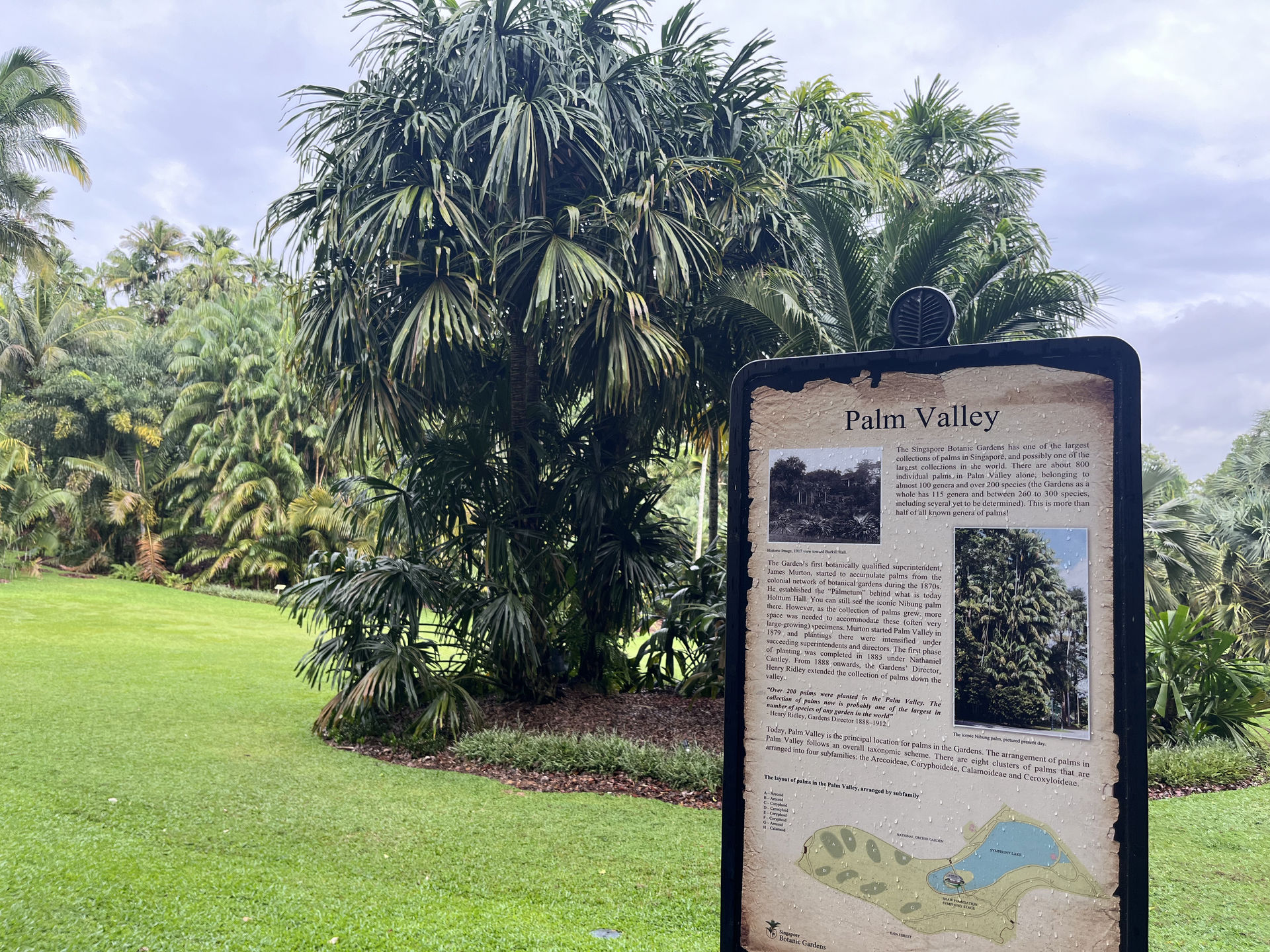
I didn't dig into these back then there as orchids drew my all attention there. But today in Berkeley botanical garden, I wandered around the Palm garden and these questions pop up again. So I took some time try to understand these leather leafy guys.
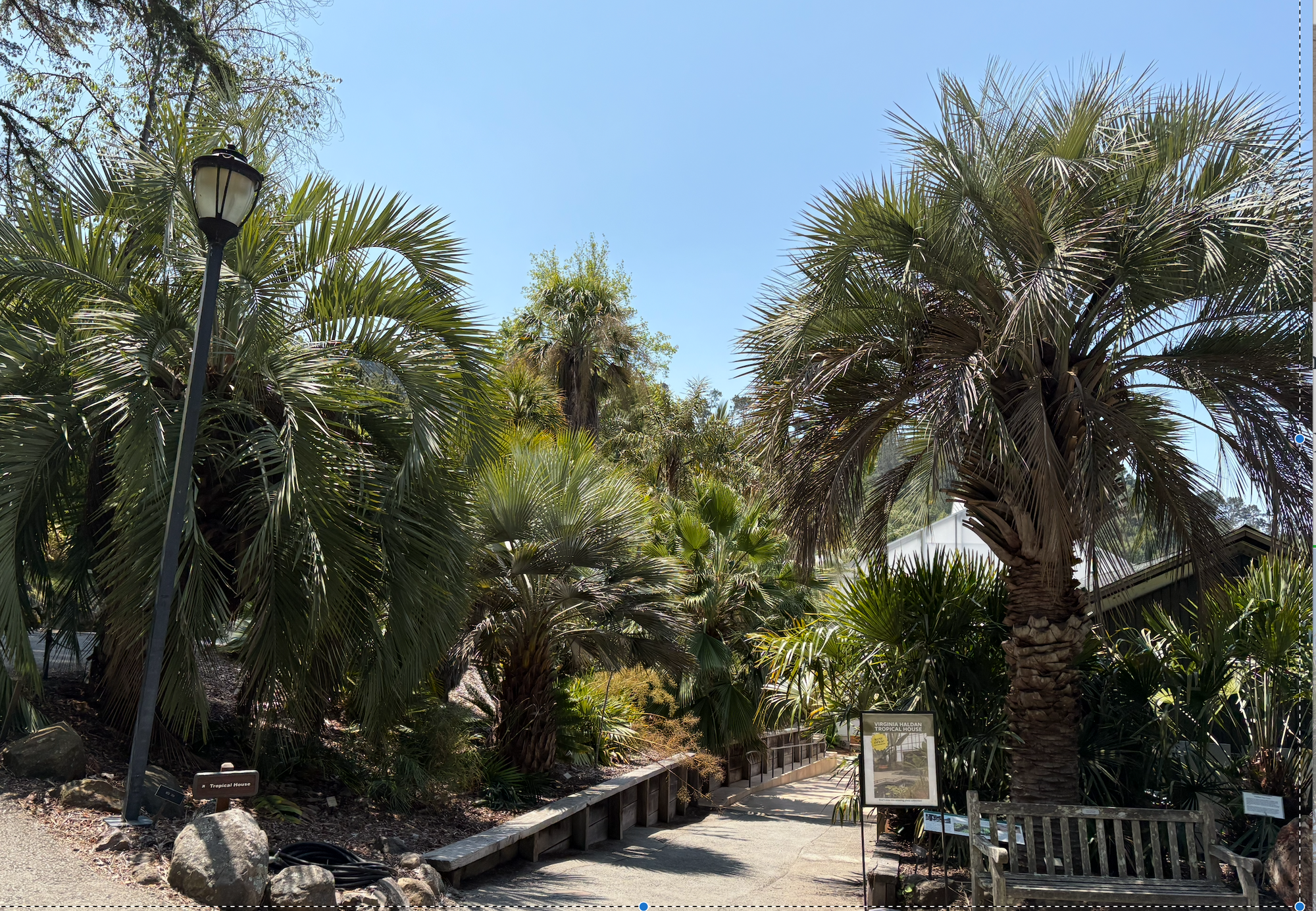
Thanks to film industry, coconut would be probably the most well know palms, and we even subconsciously connect palms with tropical area, sandy beaches and so on. But palms also in sub-tropical area: in California we have California Palm (Washingtonia filifera).
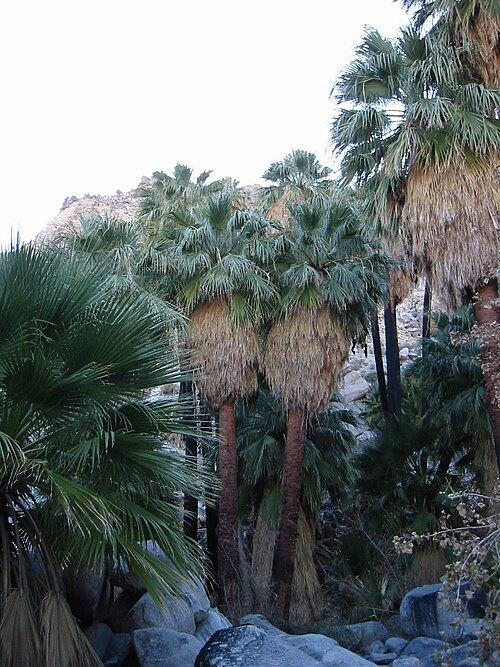
Are there any obvious morphological differences for colder and warmer areas palms? Unfortunately at least leaf shapes (pinnate or palmate shaped) give no hint on the origination of the species based on my observation. (Not sure aobut smoothness of the trunk, size and height).
Back to the question of their positions in the evolution history. First of all, they are monocots (单子叶植物), such wheat, iris. You may found those monocots are grass-like, and having striped leave veins. But how come palm become are tree?Except that they are not real trees.
Real tree here refers to tree-shaped plants with vascular cambiam which grows both inwards and outwards every year to thicken the trunk, and therefore they have wood rings. Palms do not play this rule at all. When a young palm tree is born, their primary thickening meristem (分生组织)are focused on making the trunk larger (consisting of parenchyma cells). Once it's done, their tip (apical meristem) takes over to grow taller. Unlike a real tree, apple tree for example, would have secondary growth year after year via vascular cambiam (维管束形成层). [ref]
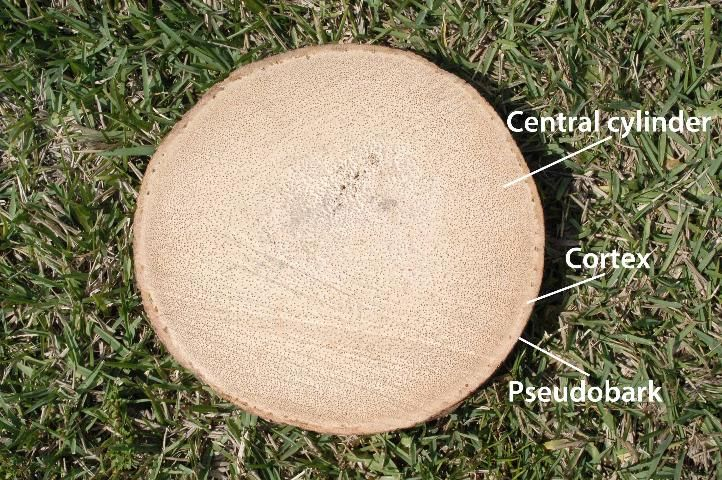
But wait: aren't conifers, such as pines, sequoia, are real trees right? Meanwhile monocot being seed plants(种子植物) is more advanced than conifers (裸子植物) evolutionally speaking. How come they become more primitive in terms of forming the trunk and becoming a tree?
Well it turns out that everything is relative and "advance" is a human bias. Bamboos, tree ferns (桫椤) do not meet the definition of real trees either but they each come up with their own ways of getting high in the canopy and
Palms also grow merely from their tip, once damaged, they would die. This is also different from the real trees, which could have branches! Have you ever seen a branched coconut trees? Probably not :)
Wait again, I know another exception: yucca. I personally even grow a Yucca Elephantiles in my front yard. For others to have a visual impression, joshua trees are actually a kind of yucca, not the real trees. They are also monocot, tree-ish, with branches.
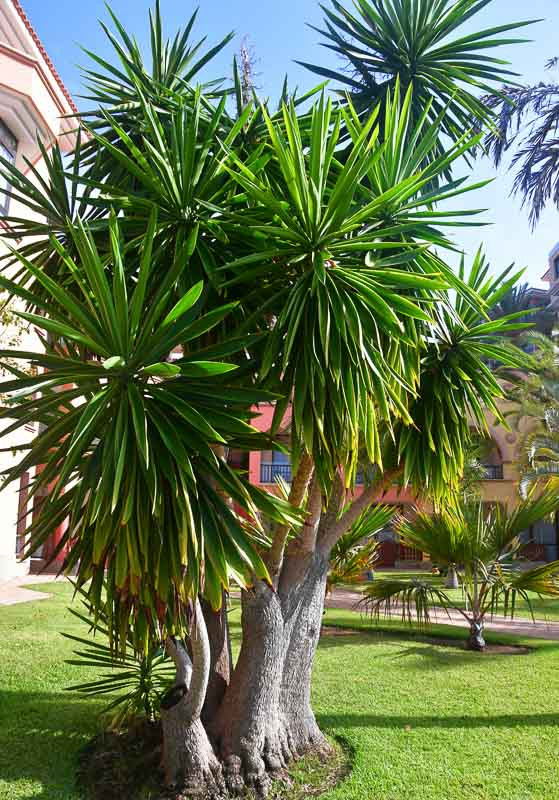
Well I guess we just have to say nature do not play by rule and nothing is absolute as it is on the old textbook, organism would find their ways for their own problems.