2025-07 Seattle Wastewater treatment tour
When traveling in Seattle recently, I had an opportunity to tour wastewater treatment at King County west point site. The tour is informative and well-organized. After the tour, I got much more understanding the complexity of an often taken for granted aspect of our daily life. Let's see how it works!
Classes
Our tour started in the Saturday morning. The session lasted for 2 hours. The first half was in a classroom and participants, roughly ten of us, mostly local residents, listened to the guide about the wastewater basics.
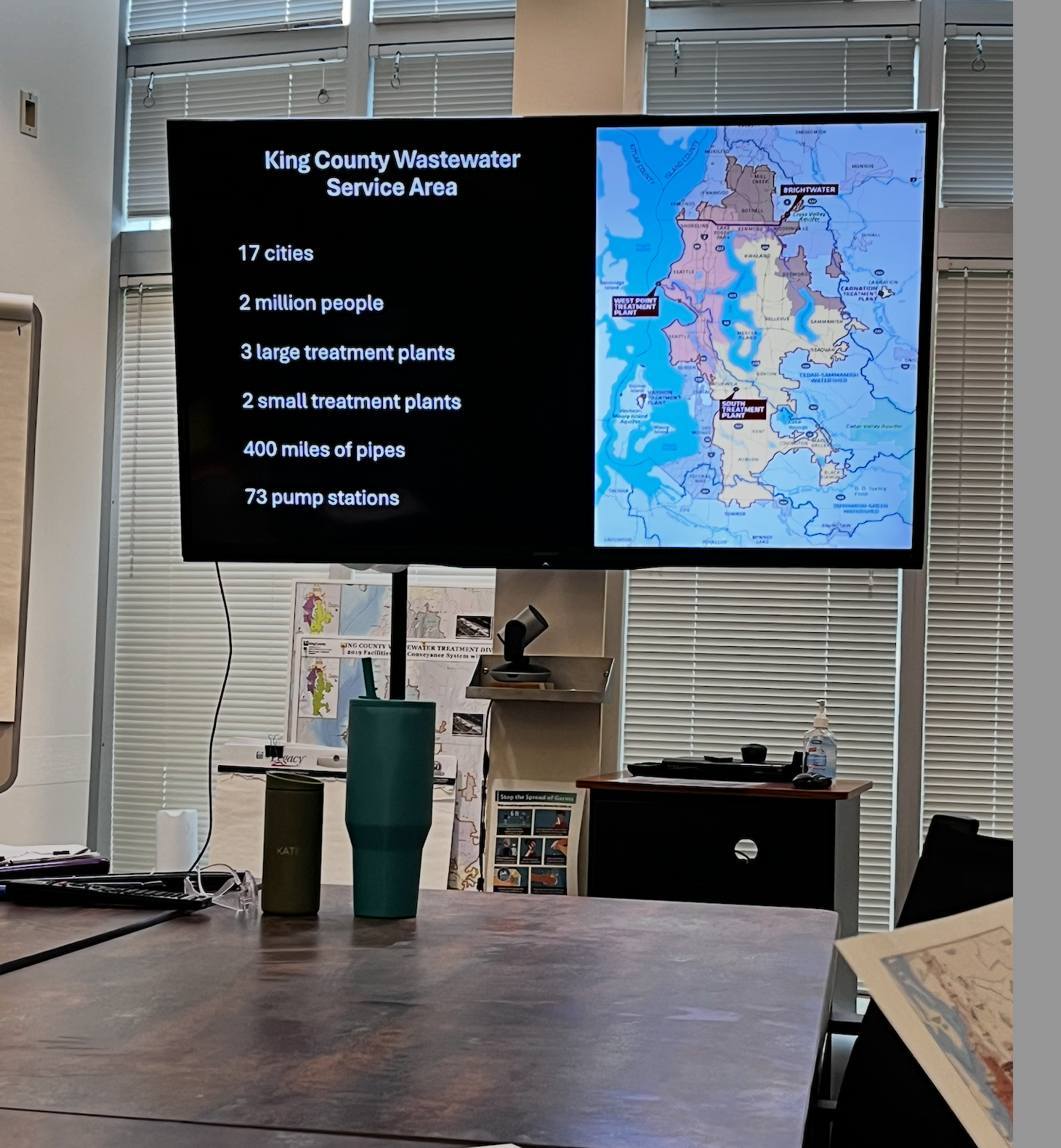
A few fun facts stood out during the introduction:
- An individual consumes 300 gallon water daily on average, only accounting for the direct water consumption such as drinking, irrigation, bath etc.
- Combined Sewage System, where sewage waste water and storm runoff share the same piple can pose a problem. Under heavy rain, water flow exceeds the threshold and have to be discharged to the river / ocean directly without treatment. This is unfortunate but necessary. King County, Washington has both combined sewage system and separate system, due to the legacy reason.
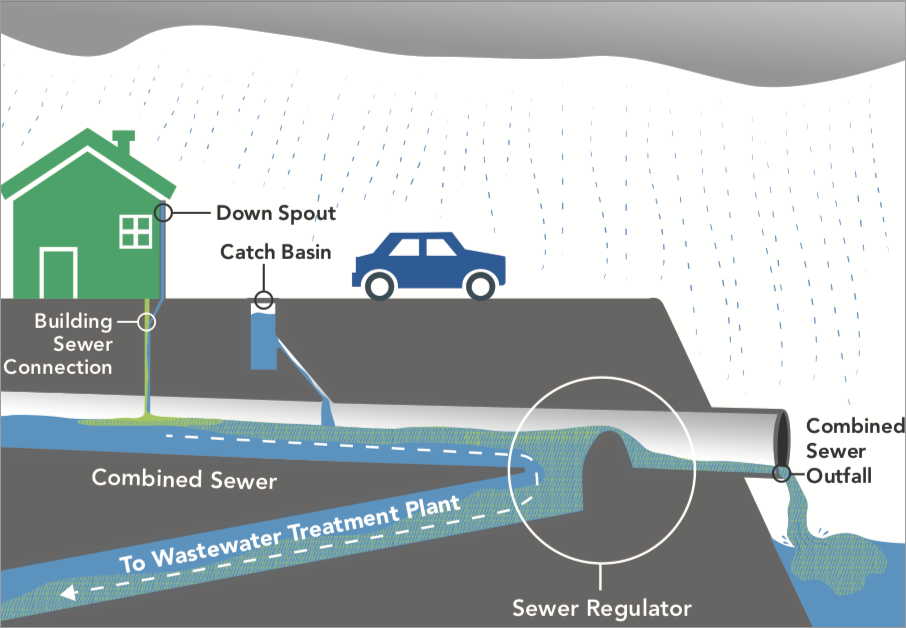
- Waste water treatment is owned by county but clean water is provided by various different entities, for example, city.
Wastewater treatment process handouts
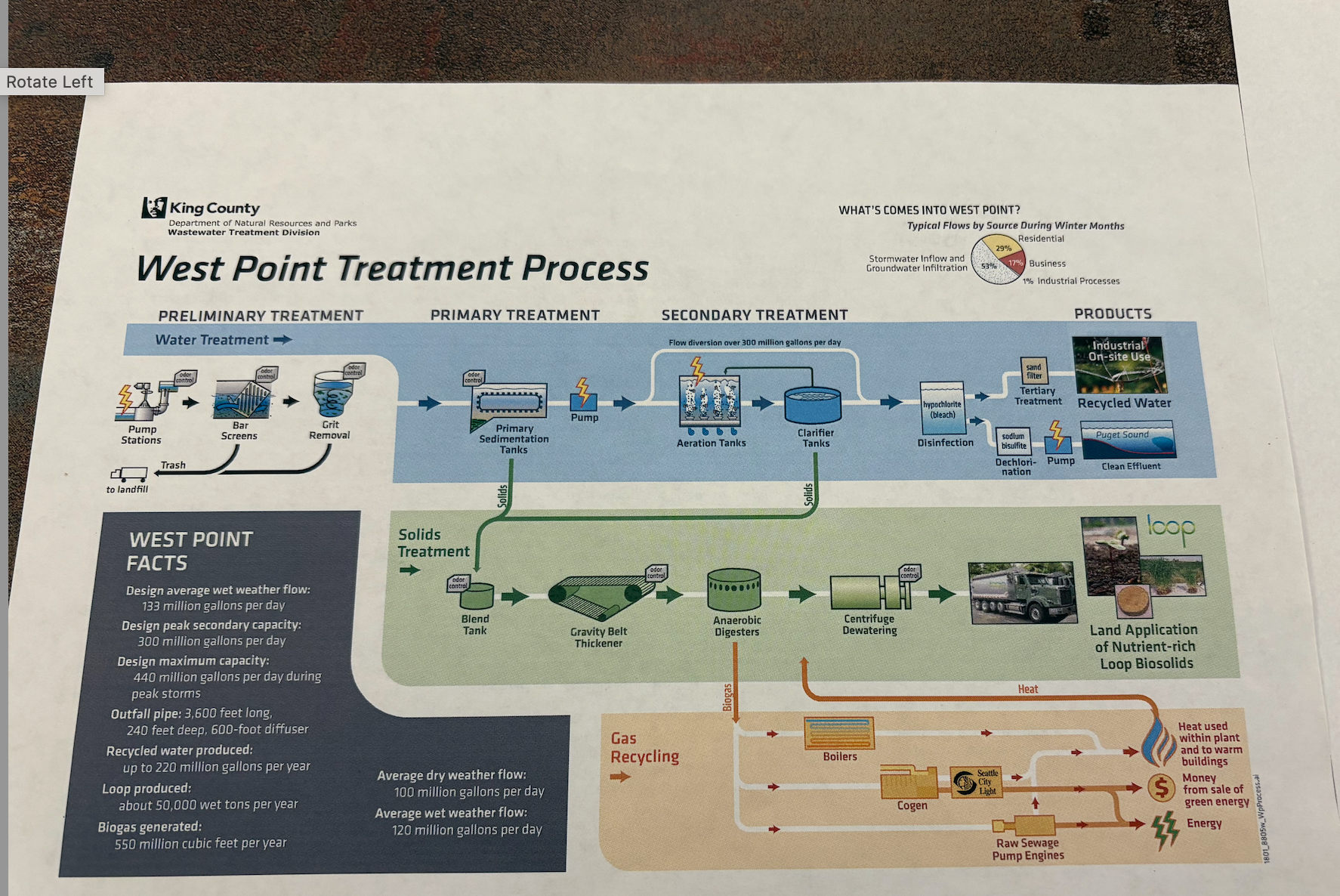
Wastewater treatment, at high level consists of 4 steps.
- Preliminary treatment, physically screen and filter out the solid waste such as paper towel.
- Primary treatment: you would be surprised that the powerful role of simple gravity plays here. When waste water is pumped at high speed into a huge sedimentation tank, heavy solid waste such as poop settle at the bottom. Light foam, oily waste float on the top.
- Secondary treatment, this is where the biological work begin. Microorganisms such as Amoeba, simple form animals, as well as bacteria are replenished into an aeration tank. To really accelerate decomposing process, warm oxygen, extracted from air by filter out nitrogen, is pumped into the water. After bio breakdown process is finished, a round shape secondary classifier further remove activated sludge and return that to reuse again.
- Last phase is disinfection via hypochlorite.
Onsite tours
After classes, we all wear the working vest and helmet, to browse the facilities on site.
Primary treatment, sedimentation tank. From the picture, you can see iron bars are placed at the bottom tank, scraping the poop back to concentrate them.
Sample water treatment of gravity layering.

The classifier, used at the end of the secondary treatment, is a big centrifuge machine. Our guide mentioned, "at this point, while many organic materials are decomposed, certain chemicals are very resistant to break down. We have to dump them to open water directly. This means the best way to reduce those chemicals is to reduce their consumption in the first place. This reminds me of the coral reef friendly sunscreen as an example.
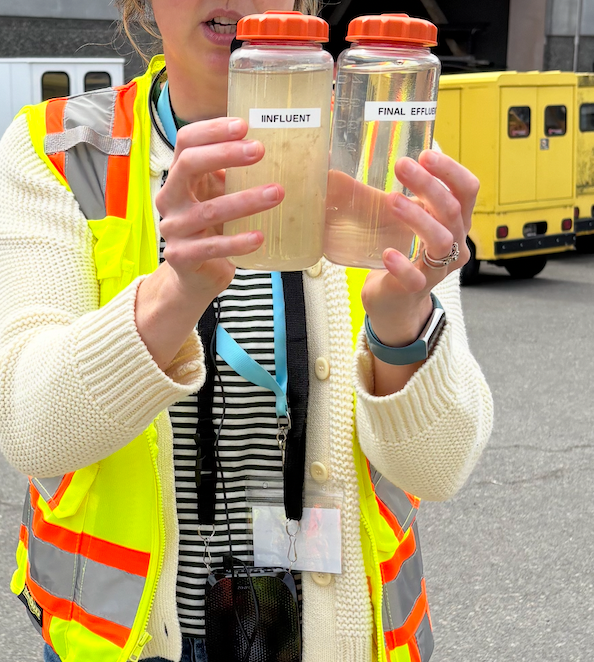
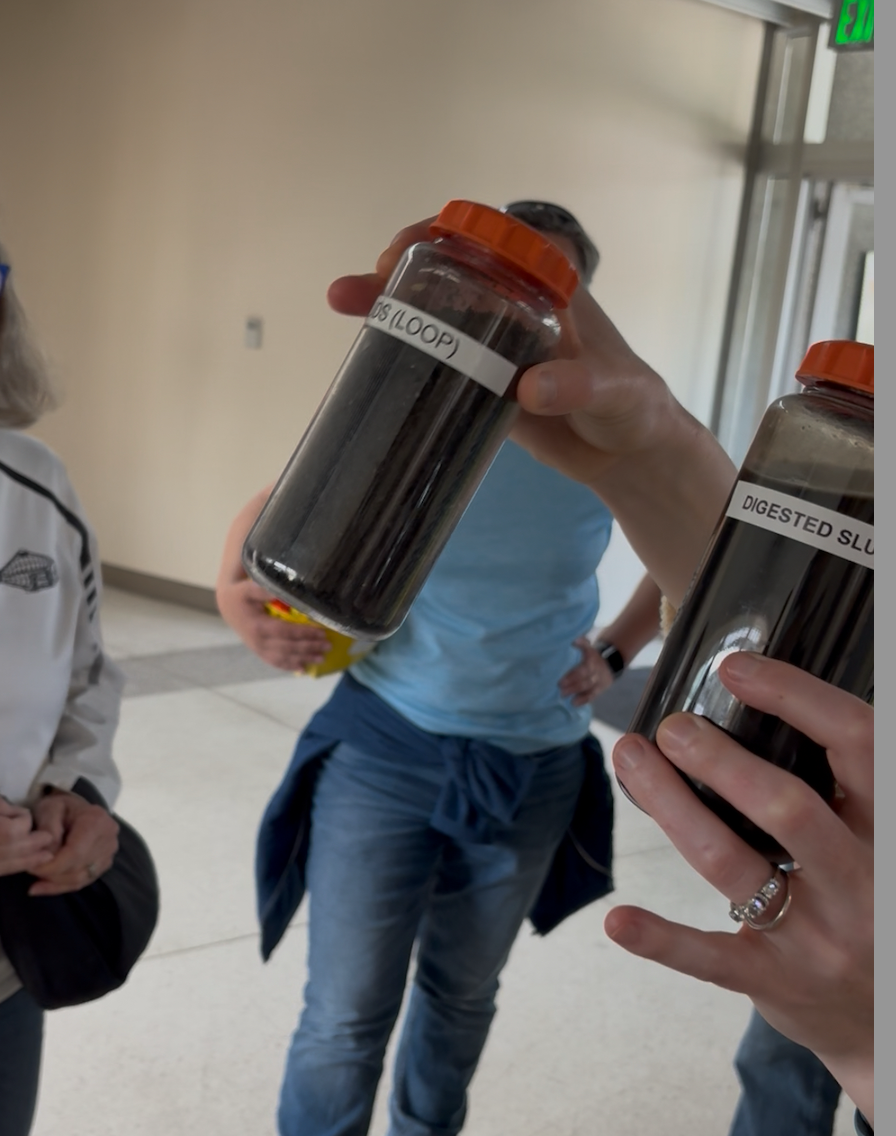
Water quality before and after the secondary treatment.
Classifiers also collect the solid waste at the bottom. Already been digested by microorganisms, they are qualified as Class B compost.
Electricity disaster recovery
Final tour ended at an eletricity room. In 2017, an electricity incident(wiki, 2017 flood) caused the power voltage sag. This affected the pump's functionality, and the domino failure effect caused 30 million gallons sewage water dumped to puget sound without any treatment.
To prevent from that, starting from 2021, they came up with this battery room project. After 3 years, a battery room was equipped with 56 lithium-titanium battery cabinet, and every 8 could provide electricity supplement for one pump.
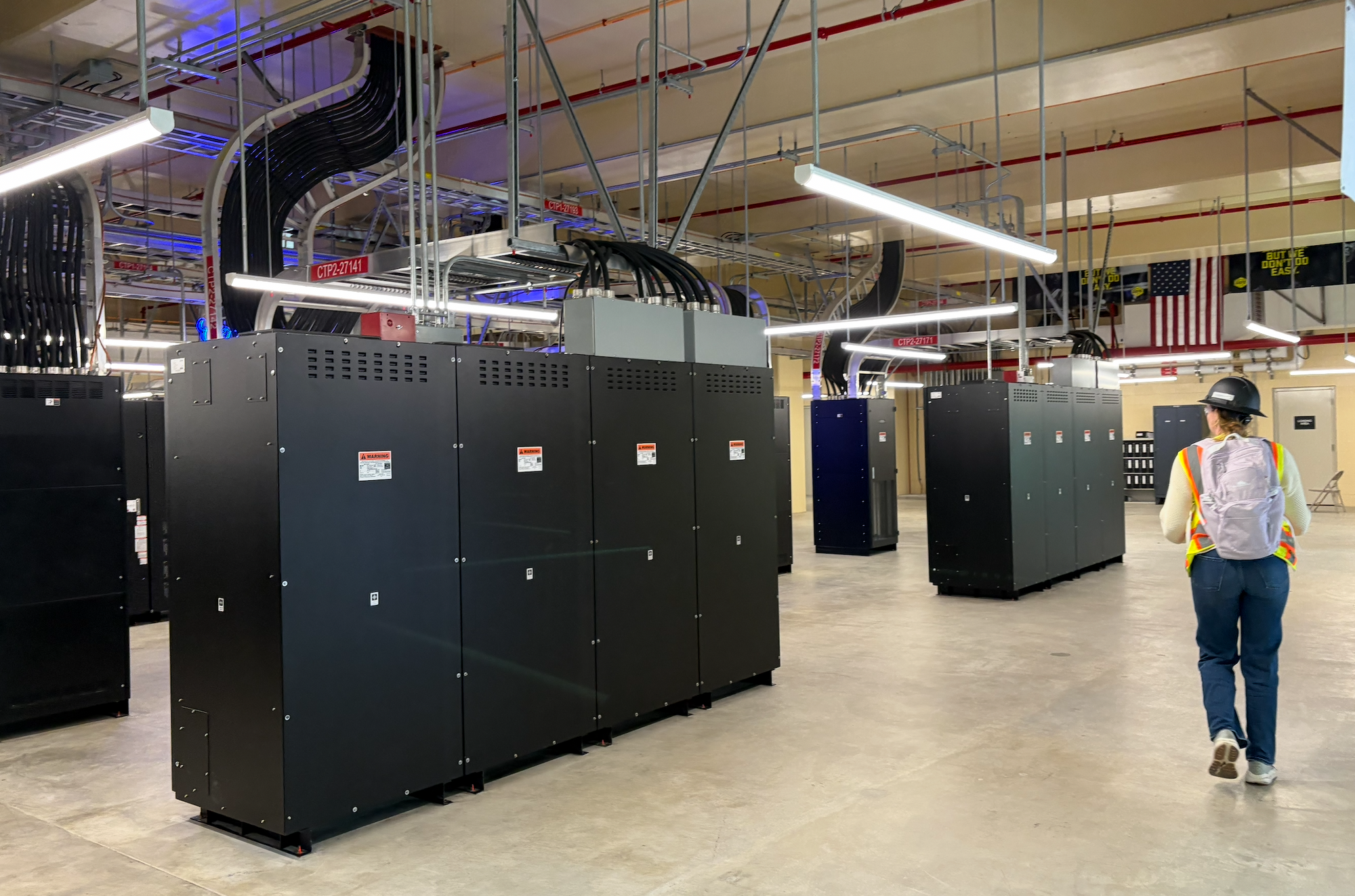
The battery room is also helpful when they need to switch from main power line to secondary. I have heard important facility is provided with backup power lines. During the switch there'll also be 4-6 seconds of transition without power, when battery system can also provide power.
Epilogue
In the end, our guide said this was the first wastewater treatment tour for 4 years! Due to COVID and construction work, the tour has been paused. I am used to garden / museum related tour, but it's first time for civil engineering, and I am genuinely impressed.
In software engineers' eye, a waste water processing essentially is another stream processing system in real life, with same flow control, handle differently when system is under load, and reliability requirement, how to transition to backup power supply during incident.
Trivias
Certain trivia details I found interesting, only to myself.
- Puget Sound was mentioned so many times in the tour but I am unfamiliar with it. It actually refers to the entire water area in Seattle, Tacoma.
- One participant mentioned Grand Coulee Dam also offers great tour. Worth checking out next time if I am nearby that area.
- Daily processing capacity, 200 million gallons, when reaching 50%, water goes directly to puget sound after primary treatment (no microorganisms processing). So each stage processing capacity is different? not sure could ask them later. Chicago wastewater treatment seems to be the largest.
- Some water is also used for Golf course, nearby garden, instead of pumping into puget sound directly.
- Youtube, video 1, video 2.