2026-02 Chinese Immigrants in California
Recently, while preparing for a topic on Chinese culture and the Lunar New Year, I researched the history of early Chinese immigrants. I learned so much that I felt compelled to document and share these stories more broadly.
1850 Gold Rush
The first wave of Chinese workers arrived in California in the late 1850s. At that time, the Qing Dynasty was plagued by the Opium Wars and the Taiping Rebellion; the financial burden of war reparations to Britain fell heavily on commoners. When news of California’s gold mines reached China, it sparked the public's imagination.
第一批华工于1850年代后期抵达加利福尼亚。当时,清朝正饱受鸦片战争和太平天国运动的困扰;向英国支付战争赔款的财政压力沉重地落在平民百姓身上。当加州发现金矿的消息传到中国时,极大地激发了人们的想象力。
An interesting linguistic note: even today, the Chinese word for San Francisco, 旧金山 (Jiùjīnshān), literally means "Old Gold Mountain." Later, when gold was found in Melbourne, Australia, that city was named "New Gold Mountain."
一个有趣的语言现象是:即便在今天,中文里对旧金山(San Francisco)的称呼依然是“旧金山”,字面意思就是“古老的金山”。后来,当澳大利亚墨尔本发现金矿时,那座城市被命名为“新金山”。
Thousands of Chinese people arrived in California hoping to join the rush. In those early days, San Francisco’s "Golden Gate" was open to everyone: no visas were required, and there was no formal border control. Chinese immigrants formed their own social structures to manage settlement, job opportunities, and community support.
数以千计的中国人抵达加州,希望能加入这场淘金热。在那个早期年代,旧金山的“金门”对所有人开放:不需要签证,也没有正式的边境管制。华裔移民组建了自己的社会结构,以此来管理安置、就业机会和社区支持。
Contrary to the common impression that Chinese workers were only exploited laborers, many were entrepreneurial. They somtimes formed groups to "claim" mines via preemption [2] (claiming abandoned or unworked land) rather than purchasing them with capital, which they lacked.
与人们普遍认为华工只是被剥削的劳工的印象相反,许多人具有创业精神。由于缺乏资本,他们有时会通过“先占权”(即申领被遗弃或尚未开采的土地)来组建团队并“认领”矿井,而不是直接出资购买。

California's Altitude
Initially, the industrious nature of Chinese immigrants earned them praise. They were a vital economic force, contributing significantly—up to 25%—of California's state tax revenue. However, their economic significance did not translate into social status. Local workers in California soon grew concerned about competition from Chinese labor.
华裔移民勤劳刻苦的品质赢得了赞誉。他们贡献了加州高达25%的州税收入 [3]。然而,经济上的重要性并未转化为社会地位。加利福尼亚当地的工人很快就开始担心华工带来的竞争。
The federal government in Washington, D.C., however, saw things differently. Their priority was the Transcontinental Railroad. To connect the East Coast's goods to Western markets and eventually to Asia, they needed a massive workforce. To find that workforce, they looked back toward China.
然而,华盛顿特区的联邦政府有着不同的看法。他们的首要任务是修建横贯大陆的铁路。为了将东海岸的商品运往西部市场并最终销往亚洲,他们需要大量的劳动力。为了寻找这些劳动力,他们将目光投向了中国。
1870 Building Railway
To facilitate the hiring of Chinese laborers, the U.S. and the Qing government signed the Burlingame Treaty in 1868. This was one of the most equitable treaties China signed with a Western power in the 19th century. Remarkably, it granted citizens of both countries the right to travel and reside freely in the other without a visa. (Side note: the city of Burlingame in San Mateo County is named after the treaty’s architect, Anson Burlingame.)
为了方便聘用华工,美国和清政府于1868年签署了《蒲安臣条约》(中美天津条约续增条款)。这是中国在19世纪与西方列强签署的最平等、互利的条约之一。值得注意的是,它授予两国公民无需签证即可在对方国家自由旅行和居住的权利。(注:圣马特奥县的伯灵格姆市就是以该条约的发起人安森·蒲安臣命名的。)

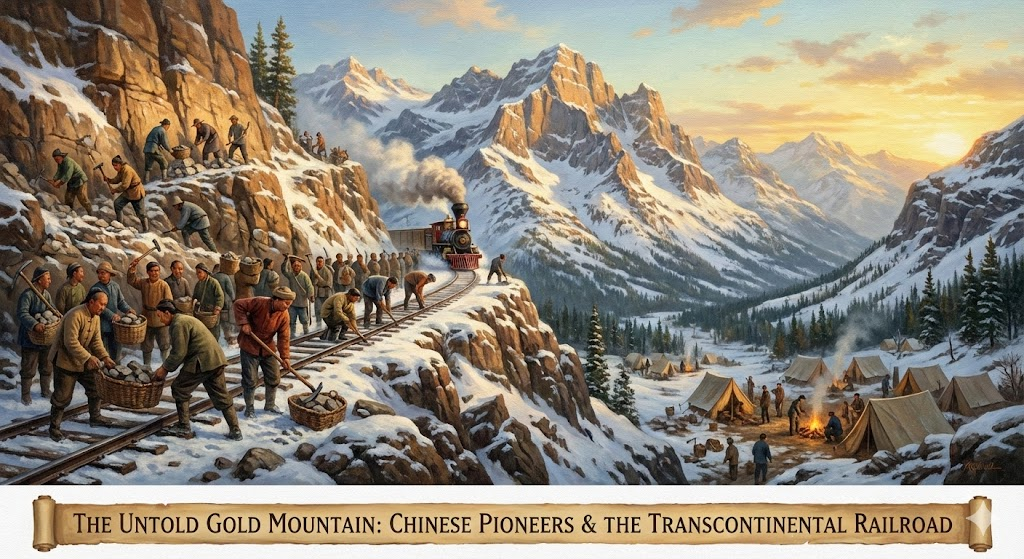
By the peak of construction, 80% to 90% of the Central Pacific Railroad workforce was Chinese. The work in the Sierra Nevada mountains was grueling. During the harsh winters of the late 1860s, avalanches frequently buried camps, causing heavy casualties.
尽管面临危险,华工仍遭遇了系统性的歧视:他们必须自掏腰包支付伙食和住宿费用,而白人工人的费用则由公司承担;他们的工资比白人工人低20%到30%;他们实行三班倒,每班工作8小时,以确保工程24小时不间断进行。
Despite the danger, Chinese workers faced systemic discrimination:
- Costs: They had to pay for their own food and lodging, while white workers’ expenses were covered.
- Wages: Their pay was 20% to 30% lower than that of their white counterparts.
- Conditions: They worked 8-hour shifts in three rotations to keep the project moving 24/7.
尽管面临危险,华工仍遭遇了系统性的歧视:他们必须自掏腰包支付伙食和住宿费用,而白人工人的费用则由公司承担;他们的工资比白人工人低20%到30%;他们实行三班倒,每班工作8小时,以确保工程24小时不间断进行。
In 1867, Chinese workers organized a strike for equal treatment. The railway company suppressed the strike by cutting off their food supplies. Facing starvation in the remote mountains, the workers were forced to resume work.
1867年,华工组织了一场罢工,要求平等待遇。铁路公司通过切断食物供应镇压了罢工。在偏远的山区面临饥饿的威胁,工人们被迫恢复工作。
However, the work Chinese workers are
The Era of Exclusion
After the Transcontinental Railroad was completed in 1869, Chinese workers sought new opportunities in Southern plantations, Eastern shoe factories, and the reclamation of the Sacramento Delta wetlands. However, anti-Chinese sentiment soon spread nationwide.
1869年横贯大陆铁路完工后,华工在南方种植园、东部鞋厂以及萨克拉门托三角洲湿地的开发中寻找新机会。然而,排华情绪很快蔓延至全国。
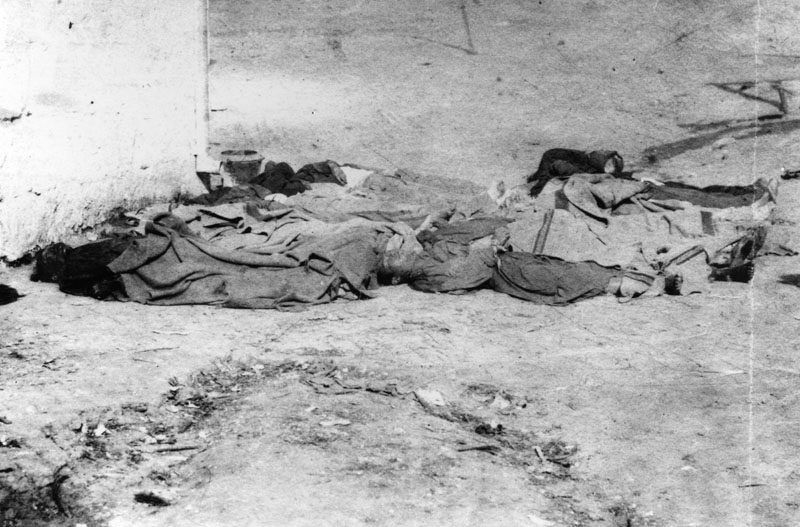
This hostility culminated in the 1882 Chinese Exclusion Act, the first U.S. law to ban immigration and naturalization based specifically on race or national origin. This era was marked by extreme violence:
- 1871 Los Angeles: One of the largest mass lynchings in American history left 19 Chinese people dead.
- Snake River, Oregon: A group of Chinese miners was massacred by outlaws at a spot known today as Chinese Massacre Cove.
这种敌对情绪在1882年的《排华法案》中达到顶峰,这是美国第一部专门针对特定种族或国籍禁止移民和入籍的法律。这一时期充满了极端暴力:1871年在洛杉矶,美国历史上规模最大的集体私刑之一导致19名华人丧生;在俄勒冈州的蛇河,一群华裔矿工被歹徒屠杀,那个地点今天被称为“华工大屠杀湾”。
Social Life
You may wonder why immigrants stayed despite such injustice and danger. While roughly half did return to China, many stayed for the economic opportunity. A worker could earn $30–$40 a month in the U.S.—significantly more (often 10x) than they could earn at home. These savings allowed them to send money back to China to buy farms and support their families' survival.
你可能会好奇,尽管面临如此多的不公和危险,为什么移民们选择留下?虽然约有一半的人确实回到了中国,但许多人为了经济机会选择了留下。在美国,一名工人每月可以赚30到40美元——这明显高于国内的收入(通常是10倍)。这些积蓄让他们能把钱寄回中国买地,供养家人的生存。
The journey to America was fraught with risk and uncertainty. Most workers had to take out a $40 loan just to afford the initial passage. This debt, coupled with high interest rates and discriminatory costs like the Foreign Miners Tax, created a heavy financial burden that threatened their goal of providing for their families.
前往美国的旅程充满了风险和不确定性。大多数工人必须借贷40美元才能支付起初的船票。这笔债务加上高额利息,以及像“外国矿工税”这类歧视性支出,造成了沉重的财政负担,威胁着他们改善家庭生活的理想。
Even for those who succeeded, life was a series of long separations; many only managed to return home a few times in their entire lives. In China, the term "grass widows" was used to describe the wives left behind, who essentially lived as if they were single while their husbands worked overseas.
即使是那些成功的人,生活也是一系列长期的分离;许多人一生中只能回乡几次。在中国,“金山婆”(或草寡妇)一词被用来形容那些留守的妻子,她们在丈夫海外务工期间,实际上过着独居的生活。
Ending
In 2014, the U.S. Department of Labor inducted the Chinese Railroad Workers into the Hall of Honor, an award shared by figures like Ronald Reagan and the 9/11 rescue workers.
From 1865 to 1869, approximately 12,000 Chinese immigrants constructed the western section of the Transcontinental Railroad—one of the greatest engineering feats in history. Their efforts laid the foundation for America's economic prosperity. They faced prejudice, low wages, and isolation, yet they courageously organized for fairer conditions.
014年,美国劳工部将华裔铁路工人列入“荣誉堂”,这一荣誉曾授予罗纳德·里根和9/11救援人员。"从1865年到1869年,约有1.2万名华裔移民修建了横贯大陆铁路的西段——这是历史上最伟大的工程壮举之一。他们的努力为美国的经济繁荣奠定了基础。尽管面临偏见、低薪和孤立,他们依然勇敢地组织起来争取更公平的条件。"
Looking back, this history is profound. Rights we now consider "common sense" were once a distant dream for these immigrants. Their struggle forces us to ask: What does it truly mean to be a citizen on this land, as prescribed by the Constitution?
回首往事,这段历史意义深远。我们现在认为理所当然的权利,曾是这些移民遥不可及的梦想。他们的奋斗迫使我们思考:按照宪法的规定,在这片土地上成为一名公民究竟意味着什么?
Reference
[1] Documentary, Exclusion Chinese Act
[2] Strangers from a different shore
[3] It Didn It Didn’t Star ’t Start with Pr t with Proposition 187: One Hundr oposition 187: One Hundred and Fifty Y ed and Fifty Years of Nativist Legislation in California, Glen Gendzel
This time the Foreign Miners’ Tax was set at only $4 a month in hopes that the Chinese would actually pay it and thereby generate some badly needed revenue for the fledgling state government. And apparently they did pay: for the next 18 years, the Foreign Miners’ Tax supplied between one-quarter and one-half of all state revenues — collected almost entirely from Chinese immigrants.